
5 | Astronomical Objects
5 | Astronomical Objects
Astronomical Objects
Planetary Systems
- A planetary system consists of a star or stellar remnant orbited by gravitationally bound planets as well as other non-stellar bodies, including dwarf planets, moons, asteroids, and comets.
- Planetary systems form from a protoplanetary disk of gas and dust that surrounds newly formed stars.
- Our solar system is an example of a planetary system.
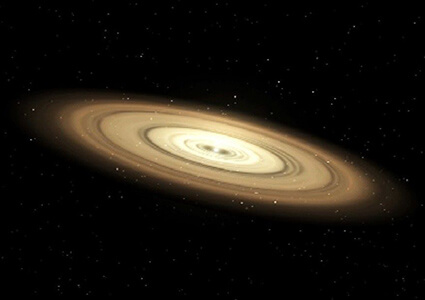
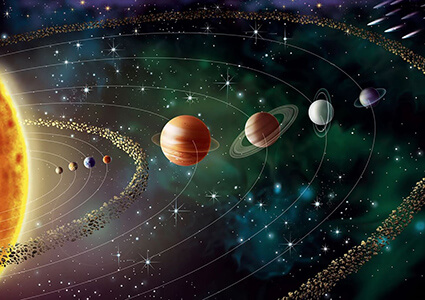
Planetary systems consist of planets and other bodies orbiting a star or stellar remnant.
(Images: NASA; RFBSIP, Adobe Stock)
Star Systems, Star Clusters and Galaxies
- Stars aggregate into gravitationally bound groups of various sizes, including star systems, star clusters and galaxies.
- A star system or stellar system is a small group of stars, typically containing fewer than 10 stars.
- A star cluster or stellar cluster is a medium-to-large group of stars.
- Globular clusters are closely associated stellar clusters consisting of thousands to millions of stars.
- Open clusters are loosely associated stellar clusters containing fewer than 1000 stars.
- A galaxy is a very large or extremely large group of stars, containing millions to trillions of stars.
- Our solar system is located in the Milky Way Galaxy, which contains an estimated 100-400 billion stars.
- Galaxies are classified into three main types based on their shape: elliptical, spiral and irregular.
- Galaxies are organised into larger aggregations known as (in order of increasing complexity) groups, clusters, superclusters and filaments.
- Stars within the same star system or star cluster usually formed around the same time from the same cloud of gas and dust, whereas galaxies contain clusters of stars of various origins and ages.
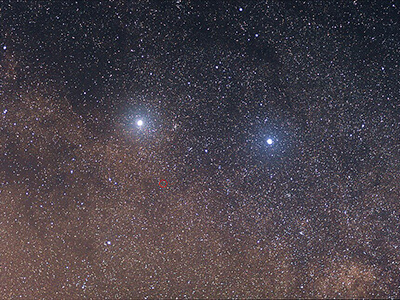
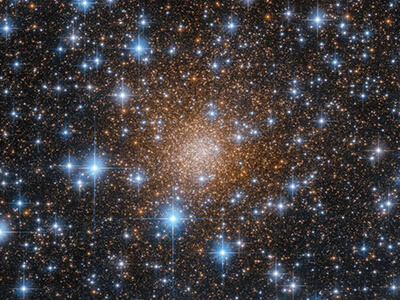
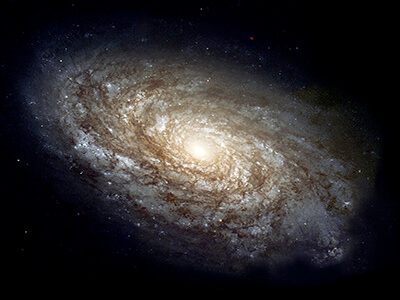
Star systems, star clusters and galaxies are gravitationally bound groups of stars.
(Images: Skatebiker, Wikimedia Commons; NASA; NASA)