
3 | Components of the Visible Universe
3 | Components of the Visible Universe
Components of the Visible Universe
- Although the terms are often used interchangeably, the visible components of the universe can be divided into two main categories – astronomical bodies and astronomical objects.
- The term ‘astronomical body‘ refers to any single, naturally occurring physical entity that exists within the universe.
- Examples of astronomical bodies include:
- Stars
- Planets and dwarf planets
- Moons
- Asteroids, comets and meteoroids
- The term ‘astronomical object‘ refers to any gravitationally bound group of astronomical bodies.
- Examples of astronomical objects include:
- Planetary systems
- Star systems, star clusters and galaxies
- Interspersed between stars and galaxies are the interstellar medium and intergalactic medium respectively, which consist mostly of hydrogen and helium, with small amounts of heavier gases and dust particles.
- Although the interstellar and intergalactic media have extremely low densities, they account for about three-quarters of all normal matter in the universe due to the vast distances between stars and galaxies.
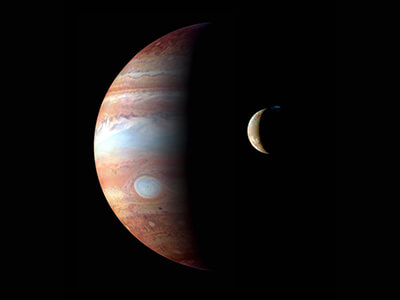
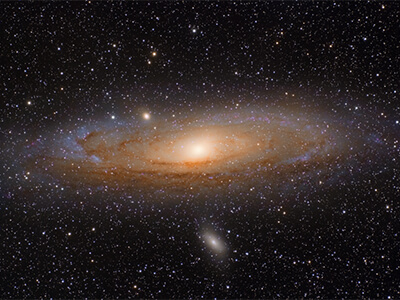
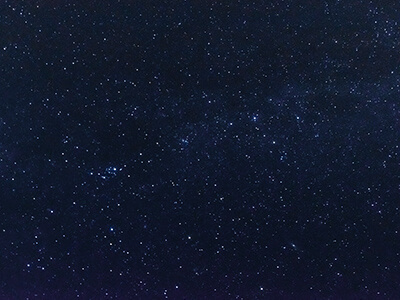
The visible universe includes individual bodies, such as stars, planets and moons, that aggregate into larger structures, such as planetary systems, star systems and galaxies; however, most of the normal matter in the universe lies in the space between stars and galaxies.
(Images: NASA; Brody Wesner, Wikimedia Commons; ihorbondarenko, Adobe Stock)