The Big Bang Universe
The Universe
7 Topics | 6 Quizzes
The Life of Stars
13 Topics | 12 Quizzes
Measuring the Universe
10 Topics | 9 Quizzes
The Big Bang Theory
6 Topics | 5 Quizzes
Timeline of the Universe
8 Topics | 7 Quizzes
Earth's Changing Climate
Earth’s Climate
9 Topics | 8 Quizzes
Earth’s Climate History
6 Topics | 5 Quizzes
The Human-Enhanced Greenhouse Effect
6 Topics | 5 Quizzes
Global Warming and Climate Change
9 Topics | 8 Quizzes
Combatting Climate Change
9 Topics | 8 Quizzes

6 | Cosmic Dust and Nebulae
6 | Cosmic Dust and Nebulae
Cosmic Dust
- Cosmic dust (also known as star dust or stellar dust) refers to microscopic, solid particles that exist throughout the universe.
- Cosmic dust primarily originates from dying and exploding stars. It is also produced by comets and asteroid collisions.
- Although not considered as distinct bodies, these tiny grains are the building blocks from which new stars, planets and other astronomical bodies can form.
- The composition of cosmic dust varies and includes silicate, metallic, carbonaceous and icy materials.
- Cosmic dust can be classified based on where it occurs.
- For example:
- Circumplanetary dust orbits planets in planetary rings or disks.
- Interplanetary dust occurs between planets.
- Interstellar dust occurs between stars.
- Intergalactic dust occurs between galaxies.
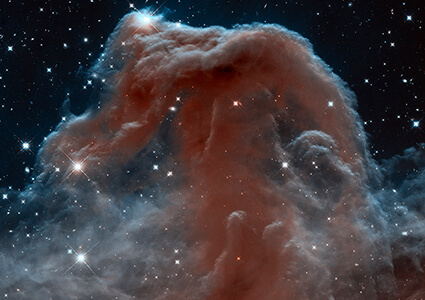
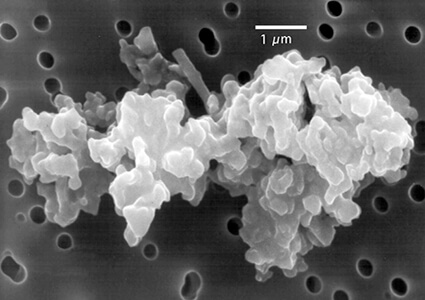
Cosmic dust originates from old stars and other astronomical bodies, and forms the building blocks of new stars and other astronomical bodies.
(Images: NASA; Amara, Wikimedia Commons)
Nebulae
- A nebula is a giant cloud of interstellar gas and dust, consisting mostly of hydrogen and helium.
- Nebulae are the remnants of dying or exploding stars.
- They are often sites where new stars form, known as ‘stellar nurseries‘.
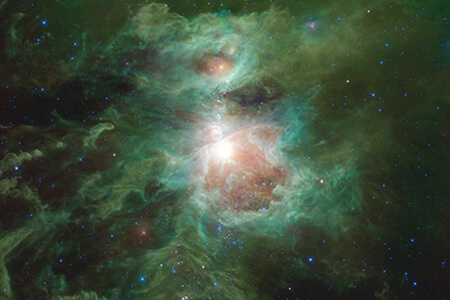
Nebulae are giant clouds of interstellar gas and dust.
(Image: NASA)